
Condition: New
Guarantee: A lot more than 5 several years
Applicable Industries: Producing Plant, Equipment Restore Retailers, Other
Excess weight (KG): 1.2 KG
Showroom Spot: None
Movie outgoing-inspection: Provided
Machinery Examination Report: Not Offered
Advertising Kind: Common Solution
Type: Custom-made
Use: Cultivators
Solution identify: HangZhou,China
Dimensions: Personalized
Colour: Main color
Content: Carbon steel
Technics: Bending.Stamping.Turning.Laser reducing.Welding
Condition: Irregular form
Floor remedy: choose:plating/electrophoresis/quenching/
Merchandise Characteristics: For agricultural machinery
Software: Mechanical Areas
OEM: Accpet
Packaging Particulars: polybag/carton.picket circumstance/pallet
Port: HangZhou Xihu (West Lake) Dis. port
| HangZhou Qiaotai Worldwide Trade Co., Ltd. & HangZhou Youshengte Equipment Co., Ltd. | ||||||||
| Company type: | Factory and trade integration | |||||||
| Address: | ZHangZhoug, China | |||||||
| Main business: | Mechanical production | |||||||
| Scope of business: | Hardware fitting, Auto parts, Mold producing and processing, Plastic products, Mechanical gear and add-ons. | |||||||
| Site area: | 2500㎡ | |||||||
| Number of employees: | No far more than fifty person | |||||||
| Processing Equipment: | large-scale laser chopping equipment, pipe bending machine, CNC lathes, milling machine, grinding equipment, punching device,automatic welding robots, Automatic chamfering machine | |||||||
| Support Components | ||||||||
| Steel | Mild Metal, Carbon Metal, 4140, 4340, Q235, Q345B, twenty#, forty five# etc. | |||||||
| Stainless Metal | SS201,SS301,SS303, SS304, SS316, SS416 and so on. | |||||||
| Brass | HPb63, HPb62, HPb61, HPb59, H59, H68, H80, H90 and so on. | |||||||
| Copper | C11000,C12000,C12000, C36000 etc. | |||||||
| Aluminum | AL6061, Al6063, AL6082, AL7075, AL5052, A380 and so forth. | |||||||
| Iron | A36, 45#, 1213, 12L14, 1215 and so on. | |||||||
| Surface Treatment | ||||||||
| Zinc Plating | Oxide Black | Clear Anodized | Color Anodized | Sandblasted Anodized | ||||
| Nickel Plating | Chrome Plating | Powder Coated | Polishing | Passivating | ||||
| Sandblasting | Laser Engraving | Chemical Movie | Brushing | |||||
| Zinc Plating | Oxide Black | Powder Coated |
| Clear Anodized | Color Anodized | Sandblasted Anodized |
| Nickel Plating | Chrome Plating | Polishing |
| Passivating | Sandblasting | Laser Engraving |
| Chemical Movie | ||
The Four Basic Components of a Screw Shaft
There are four basic components of a screw shaft: the Head, the Thread angle, and the Threaded shank. These components determine the length, shape, and quality of a screw. Understanding how these components work together can make purchasing screws easier. This article will cover these important factors and more. Once you know these, you can select the right type of screw for your project. If you need help choosing the correct type of screw, contact a qualified screw dealer.
Thread angle
The angle of a thread on a screw shaft is the difference between the two sides of the thread. Threads that are unified have a 60 degree angle. Screws have two parts: a major diameter, also known as the screw’s outside diameter, and a minor diameter, or the screw’s root diameter. A screw or nut has a major diameter and a minor diameter. Each has its own angle, but they all have one thing in common – the angle of thread is measured perpendicularly to the screw’s axis.
The pitch of a screw depends on the helix angle of the thread. In a single-start screw, the lead is equal to the pitch, and the thread angle of a multiple-start screw is based on the number of starts. Alternatively, you can use a square-threaded screw. Its square thread minimizes the contact surface between the nut and the screw, which improves efficiency and performance. A square thread requires fewer motors to transfer the same load, making it a good choice for heavy-duty applications.
A screw thread has four components. First, there is the pitch. This is the distance between the top and bottom surface of a nut. This is the distance the thread travels in a full revolution of the screw. Next, there is the pitch surface, which is the imaginary cylinder formed by the average of the crest and root height of each tooth. Next, there is the pitch angle, which is the angle between the pitch surface and the gear axis.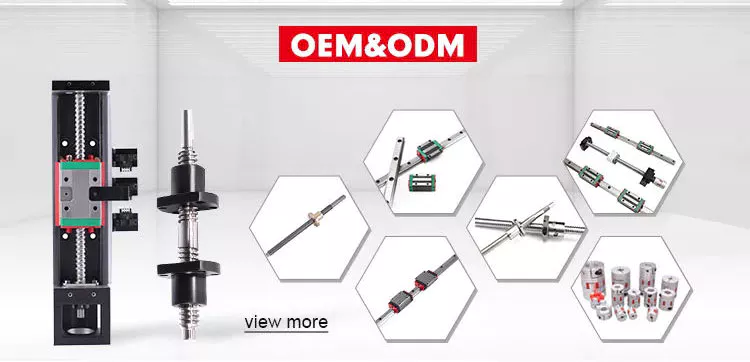
Head
There are three types of head for screws: flat, round, and hexagonal. They are used in industrial applications and have a flat outer face and a conical interior. Some varieties have a tamper-resistant pin in the head. These are usually used in the fabrication of bicycle parts. Some are lightweight, and can be easily carried from one place to another. This article will explain what each type of head is used for, and how to choose the right one for your screw.
The major diameter is the largest diameter of the thread. This is the distance between the crest and the root of the thread. The minor diameter is the smaller diameter and is the distance between the major and minor diameters. The minor diameter is half the major diameter. The major diameter is the upper surface of the thread. The minor diameter corresponds to the lower extreme of the thread. The thread angle is proportional to the distance between the major and minor diameters.
Lead screws are a more affordable option. They are easier to manufacture and less expensive than ball screws. They are also more efficient in vertical applications and low-speed operations. Some types of lead screws are also self-locking, and have a high coefficient of friction. Lead screws also have fewer parts. These types of screw shafts are available in various sizes and shapes. If you’re wondering which type of head of screw shaft to buy, this article is for you.
Threaded shank
Wood screws are made up of two parts: the head and the shank. The shank is not threaded all the way up. It is only partially threaded and contains the drive. This makes them less likely to overheat. Heads on wood screws include Oval, Round, Hex, Modified Truss, and Flat. Some of these are considered the “top” of the screw.
Screws come in many sizes and thread pitches. An M8 screw has a 1.25-mm thread pitch. The pitch indicates the distance between two identical threads. A pitch of one is greater than the other. The other is smaller and coarse. In most cases, the pitch of a screw is indicated by the letter M followed by the diameter in millimetres. Unless otherwise stated, the pitch of a screw is greater than its diameter.
Generally, the shank diameter is smaller than the head diameter. A nut with a drilled shank is commonly used. Moreover, a cotter pin nut is similar to a castle nut. Internal threads are usually created using a special tap for very hard metals. This tap must be followed by a regular tap. Slotted machine screws are usually sold packaged with nuts. Lastly, studs are often used in automotive and machine applications.
In general, screws with a metric thread are more difficult to install and remove. Fortunately, there are many different types of screw threads, which make replacing screws a breeze. In addition to these different sizes, many of these screws have safety wire holes to keep them from falling. These are just some of the differences between threaded screw and non-threaded. There are many different types of screw threads, and choosing the right one will depend on your needs and your budget.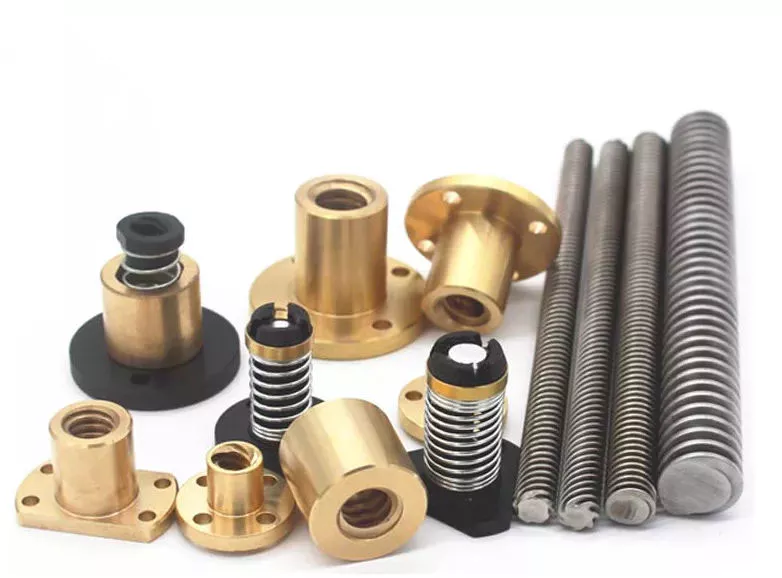
Point
There are three types of screw heads with points: cone, oval, and half-dog. Each point is designed for a particular application, which determines its shape and tip. For screw applications, cone, oval, and half-dog points are common. Full dog points are not common, and they are available in a limited number of sizes and lengths. According to ASTM standards, point penetration contributes as much as 15% of the total holding power of the screw, but a cone-shaped point may be more preferred in some circumstances.
There are several types of set screws, each with its own advantage. Flat-head screws reduce indentation and frequent adjustment. Dog-point screws help maintain a secure grip by securing the collar to the screw shaft. Cup-point set screws, on the other hand, provide a slip-resistant connection. The diameter of a cup-point screw is usually half of its shaft diameter. If the screw is too small, it may slack and cause the screw collar to slip.
The UNF series has a larger area for tensile stress than coarse threads and is less prone to stripping. It’s used for external threads, limited engagement, and thinner walls. When using a UNF, always use a standard tap before a specialized tap. For example, a screw with a UNF point is the same size as a type C screw but with a shorter length.
Spacer
A spacer is an insulating material that sits between two parts and centers the shaft of a screw or other fastener. Spacers come in different sizes and shapes. Some of them are made of Teflon, which is thin and has a low coefficient of friction. Other materials used for spacers include steel, which is durable and works well in many applications. Plastic spacers are available in various thicknesses, ranging from 4.6 to 8 mm. They’re suitable for mounting gears and other items that require less contact surface.
These devices are used for precision fastening applications and are essential fastener accessories. They create clearance gaps between the two joined surfaces or components and enable the screw or bolt to be torqued correctly. Here’s a quick guide to help you choose the right spacer for the job. There are many different spacers available, and you should never be without one. All you need is a little research and common sense. And once you’re satisfied with your purchase, you can make a more informed decision.
A spacer is a component that allows the components to be spaced appropriately along a screw shaft. This tool is used to keep space between two objects, such as the spinning wheel and an adjacent metal structure. It also helps ensure that a competition game piece doesn’t rub against an adjacent metal structure. In addition to its common use, spacers can be used in many different situations. The next time you need a spacer, remember to check that the hole in your screw is threaded.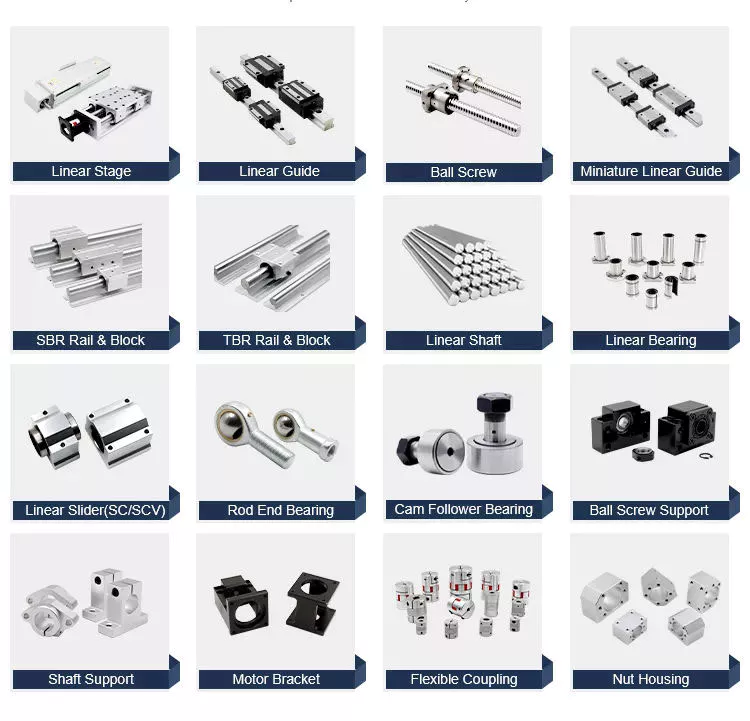
Nut
A nut is a simple device used to secure a screw shaft. The nut is fixed on each end of the screw shaft and rotates along its length. The nut is rotated by a motor, usually a stepper motor, which uses beam coupling to accommodate misalignments in the high-speed movement of the screw. Nuts are used to secure screw shafts to machined parts, and also to mount bearings on adapter sleeves and withdrawal sleeves.
There are several types of nut for screw shafts. Some have radial anti-backlash properties, which prevent unwanted radial clearances. In addition, they are designed to compensate for thread wear. Several nut styles are available, including anti-backlash radial nuts, which have a spring that pushes down on the nut’s flexible fingers. Axial anti-backlash nuts also provide thread-locking properties.
To install a ball nut, you must first align the tangs of the ball and nut. Then, you must place the adjusting nut on the shaft and tighten it against the spacer and spring washer. Then, you need to lubricate the threads, the ball grooves, and the spring washers. Once you’ve installed the nut, you can now install the ball screw assembly.
A nut for screw shaft can be made with either a ball or a socket. These types differ from hex nuts in that they don’t need end support bearings, and are rigidly mounted at the ends. These screws can also have internal cooling mechanisms to improve rigidity. In this way, they are easier to tension than rotating screws. You can also buy hollow stationary screws for rotator nut assemblies. This type is great for applications requiring high heat and wide temperature changes, but you should be sure to follow the manufacturer’s instructions.


editor by czh